
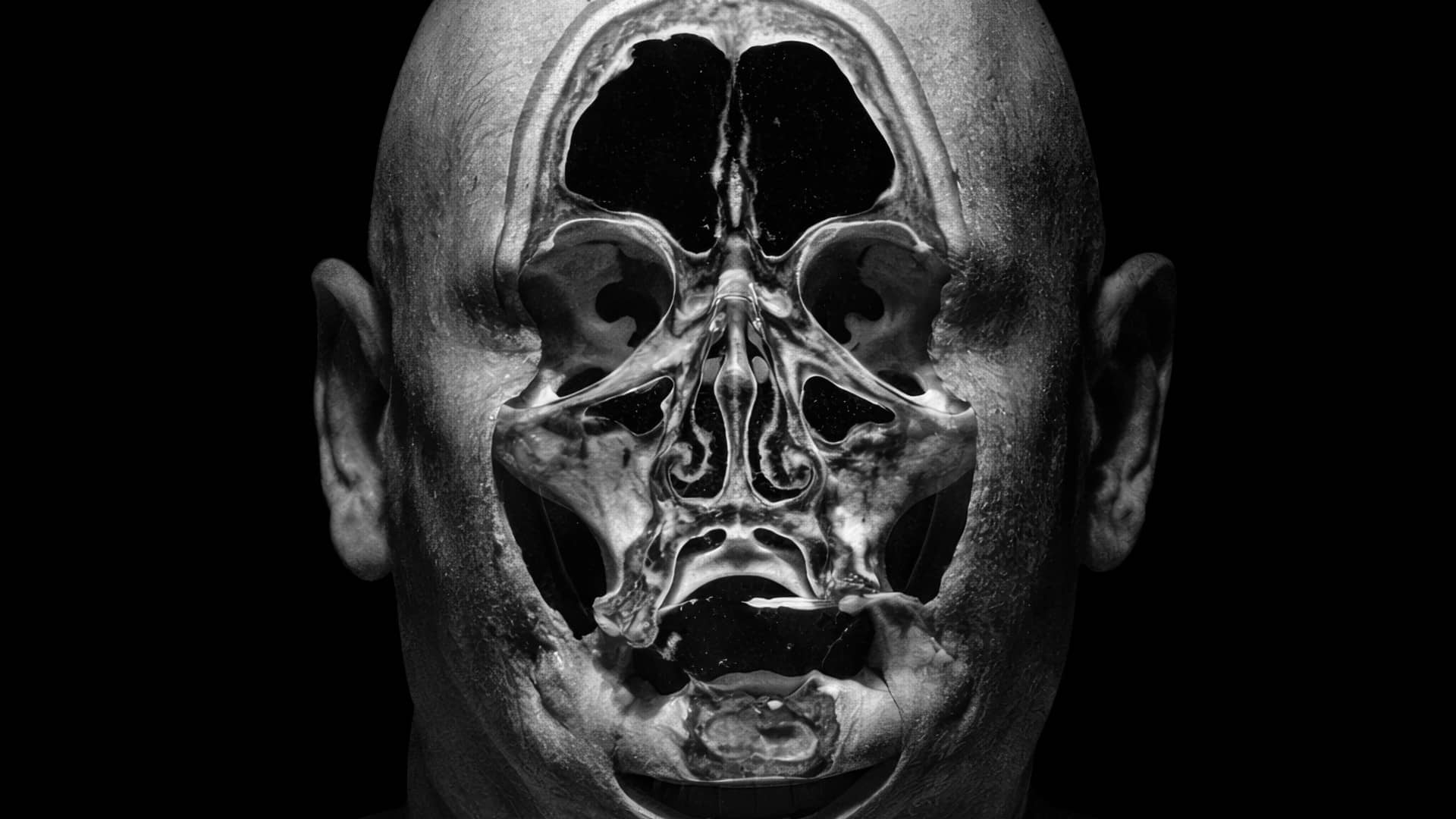
Iñigo Bilbao builds ANONYMIZED around two objects that clinical medicine usually keeps apart: the machine that images the body, and the body the machine turns into data. In one group of works a medical apparatus stands alone in empty space, an examination table, an imaging device, a scanner, lifted out of function and held as a monument. In the other, a scanned body returns as a photorealistic portrait assembled from radiological measurement. The two belong together, the two faces of a single regime of vision.
Both are passed through the same chain of instruments and returned by an AI-based image generation model. The apparatus comes back with the weight of an idol, and the scan comes back wearing skin, and in each case the image has been produced by a machine that was never looking for a likeness. The ten works hold that condition open across the series, precise and impersonal at once.
What makes ANONYMIZED a statement about the present, and not only about medical imaging, is where clinical vision now sits. Under biometric capture and generative synthesis, the body is measured before it is recognized and generated before it is photographed. Bilbao sends the clinical apparatus and his own scanned head through that logic and returns them anonymized, the instrument and the subject caught inside the same system of measurement, artifact, and machine vision.
The Apparatus Alone
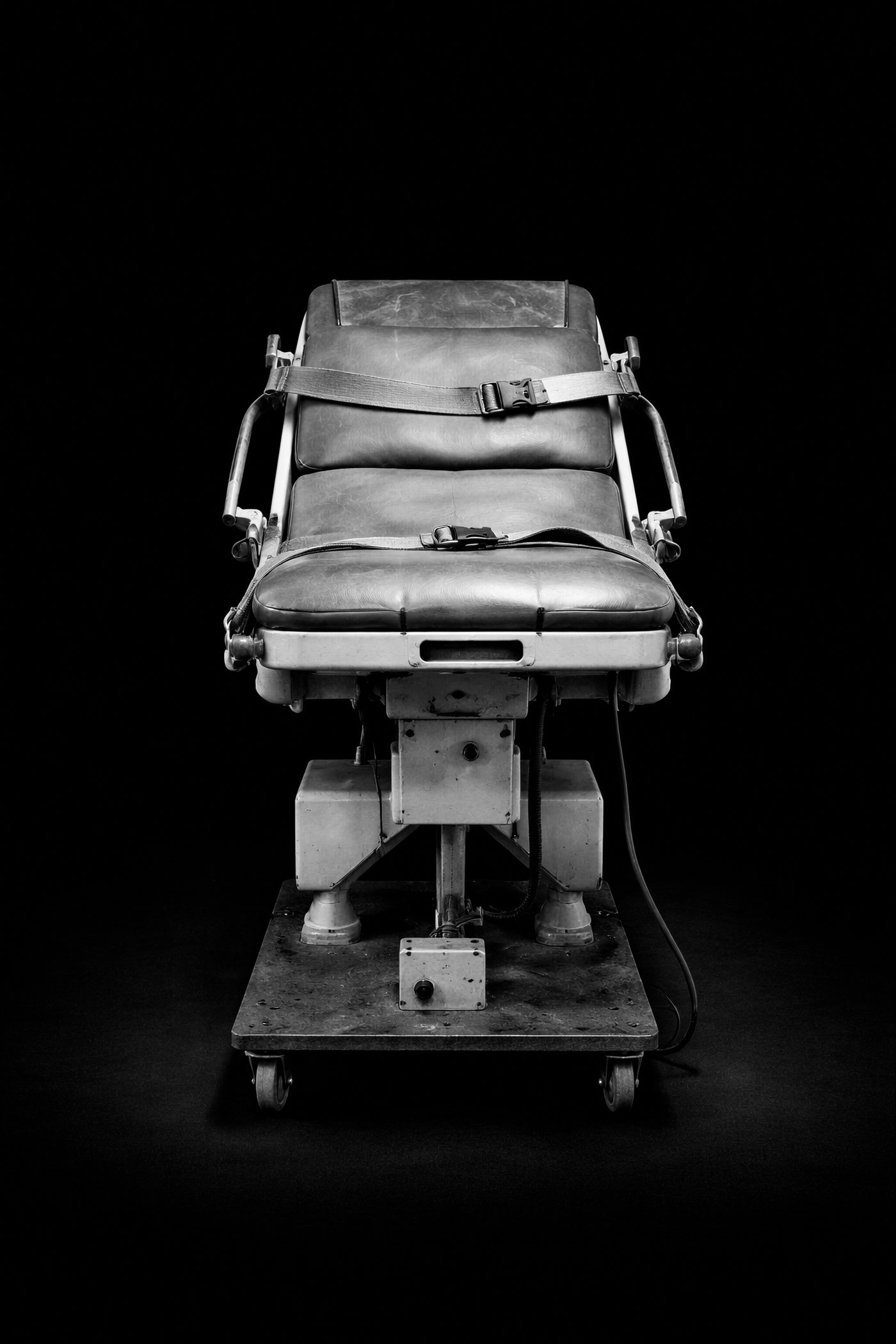
Bilbao begins where the medical image begins, at the machine. An examination table fitted with restraint straps, an imaging apparatus of clamps and cables, a scanner with a dark circular aperture, each is isolated against black and removed from the ward, the schedule, and the body it would ordinarily serve. Stripped of use, the instrument stops being neutral. It becomes a presence, silent and monumental, an object of fear, control, and clinical authority.
This is the gaze Michel Foucault described at the birth of the clinic, the medical look that claims the interior of the body and organizes it as legible depth, given here as the thing that looks. Bilbao materializes that authority as sculpture. The hollow center, the metallic surface, the straps and wires become the grammar of a system built to see what ordinary sight cannot reach, and the viewer meets the apparatus in the position the patient occupies, exposed and anticipating.
By opening with the machine, Bilbao establishes the condition that governs everything that follows. Before any face returns, there is the instrument that will read it. The apparatus is the precondition of the portraits, the structure that converts presence into data and makes the anonymized image possible.
The Tomographic Cut
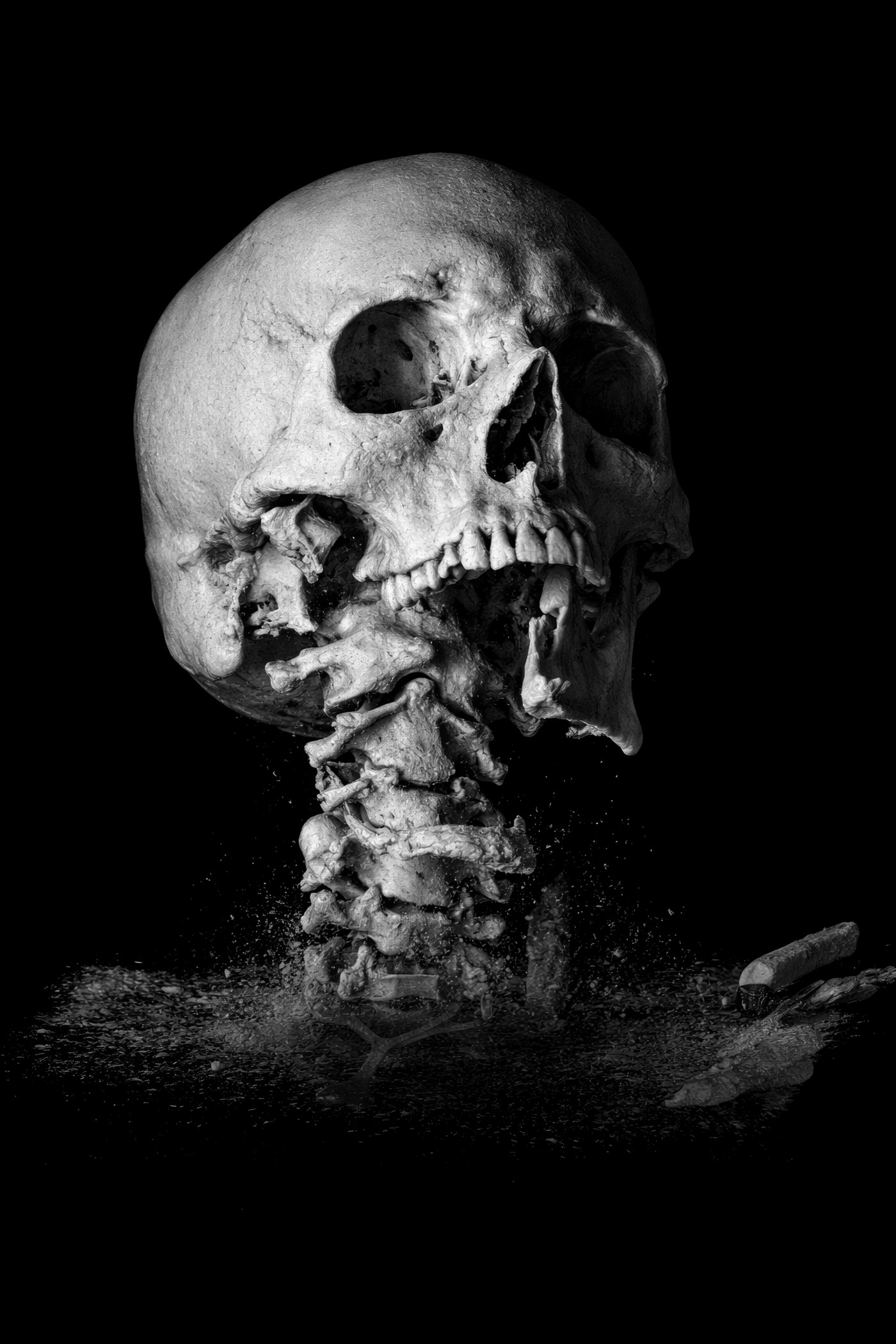
The scanned works descend from a stack of axial slices. In each slice, every pixel holds one value, the degree to which the body at that point resisted the passage of X-rays, normalized into Hounsfield Units and mapped to grayscale so that it can be seen at all. Air sits near the bottom of the scale, bone near the top, and the image becomes a writing of the body in which substance, not surface, carries the meaning a photograph would have assigned to appearance.
A photograph inherits its authority from contact, from the light that leaves a body and fixes what Roland Barthes called the that-has-been. Tomography breaks that contract. It does not record a surface struck by light, it computes a distribution of density that no eye ever saw. The medical scan is among the most complete images ever made of a body and among the most impersonal, passing under expression and resemblance to register the head as measurable matter, the same in kind for everyone.
Bilbao takes this indifference as his material. He begins the portrait at the point where the machine has already emptied the body of the codes by which a person is recognized, and he keeps that emptiness visible in the finished work. The likeness that returns is exact, and the person inside it has been translated into something anterior to identity.
Volume and the Death of Surface
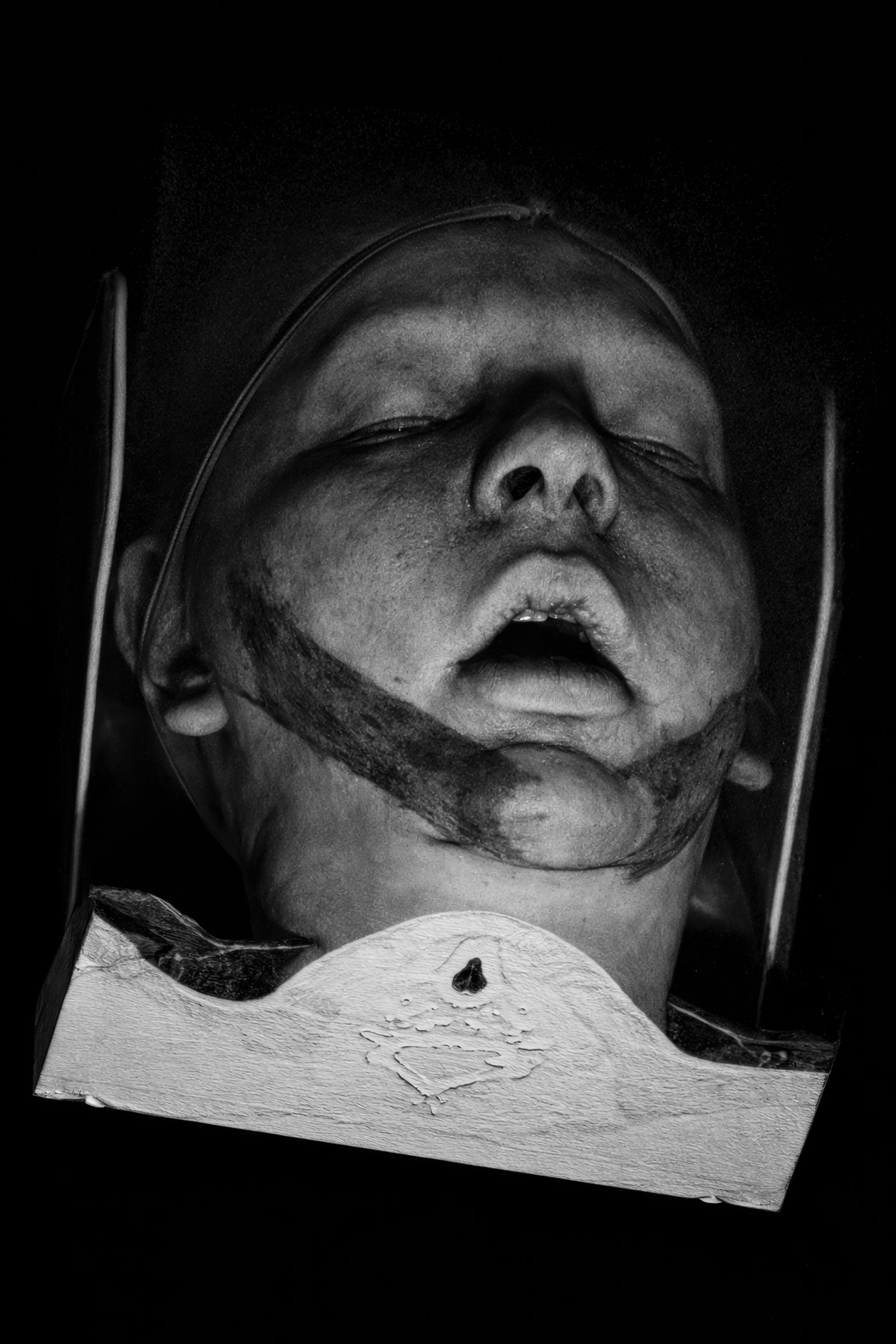
From the flat slices a body is rebuilt. Clinical software stacks the images at their true spatial spacing and fills the intervals between them until the head exists as a three dimensional grid of voxels, and a rendering is drawn from that volume by assigning color and opacity to each band of density. The image is composed from inside the body, by deciding what shall be transparent, a decision no painter of surfaces was ever asked to make.
Bilbao pushes this reconstruction toward cinematic rendering, a technique that throws physically based light and advanced shading across data no light ever reached, and produces a face warmed as if by a lamp yet assembled from pure interior. Since the Renaissance the portrait has been a window, a single surface seen from a fixed point, with the skin as the outer limit of the sayable. Here surface and depth settle onto the same plane, and the viewer looks at the face and into it at once.
What returns is a portrait after the death of surface, a likeness that has surrendered the exterior as its guarantee. The face is continuous with its own inside, and the quiet contract of portraiture, that a person can be known by the arrangement of their outer features, no longer holds.
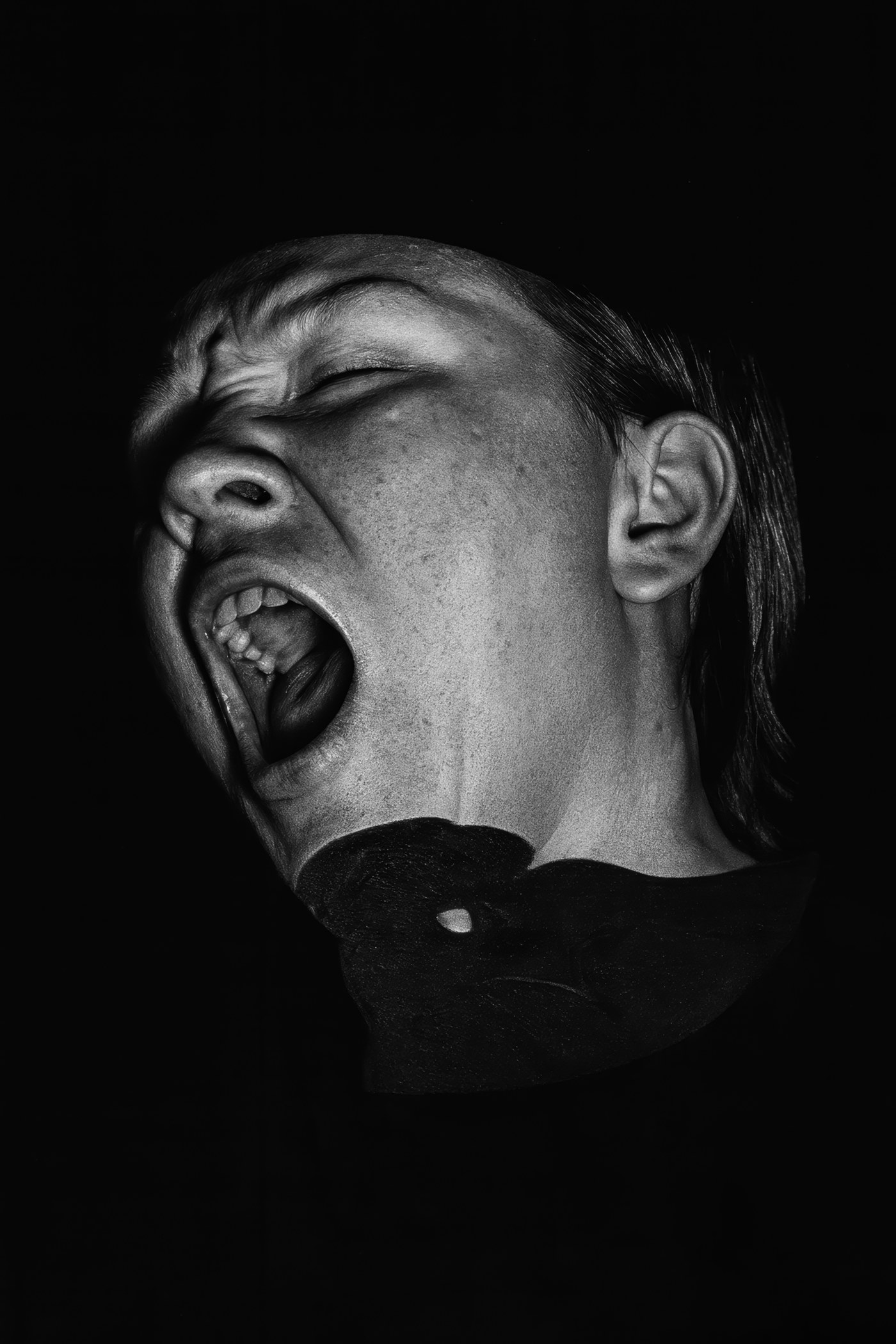
The Generative Return
The final operation restores the appearance the scan removed. Bilbao uses the advanced renders as reference material for an AI-based image generation model, and the volumetric head returns with the grain, light, and immediacy of a photograph that was never taken. An image that began as sheer quantity comes back as convincing likeness, and that likeness points to no instant in the world. Its realism is manufactured, not recorded.
This is the condition Jean Baudrillard named the simulacrum, the copy that has lost its original, the image that precedes and generates the real it appears to document. The model does not remember a face, it predicts one, drawing a plausible surface from statistical nearness to millions of others, so that what returns is at once specific and anonymous, tied to a body that exists and to a photograph that never happened.
Authorship spreads across the chain Bilbao sets in motion, the machine that examines, the scanner that reads, the software that reconstructs, the renderer that lights, the model that predicts, each seeing in a different grammar. He is the one who starts the passage and decides where it halts, steering a sequence of instruments toward an image none of them could compose alone, and in doing so he describes how pictures are increasingly made at large, by pipelines that convert measurement into resemblance and hand the result back as truth.
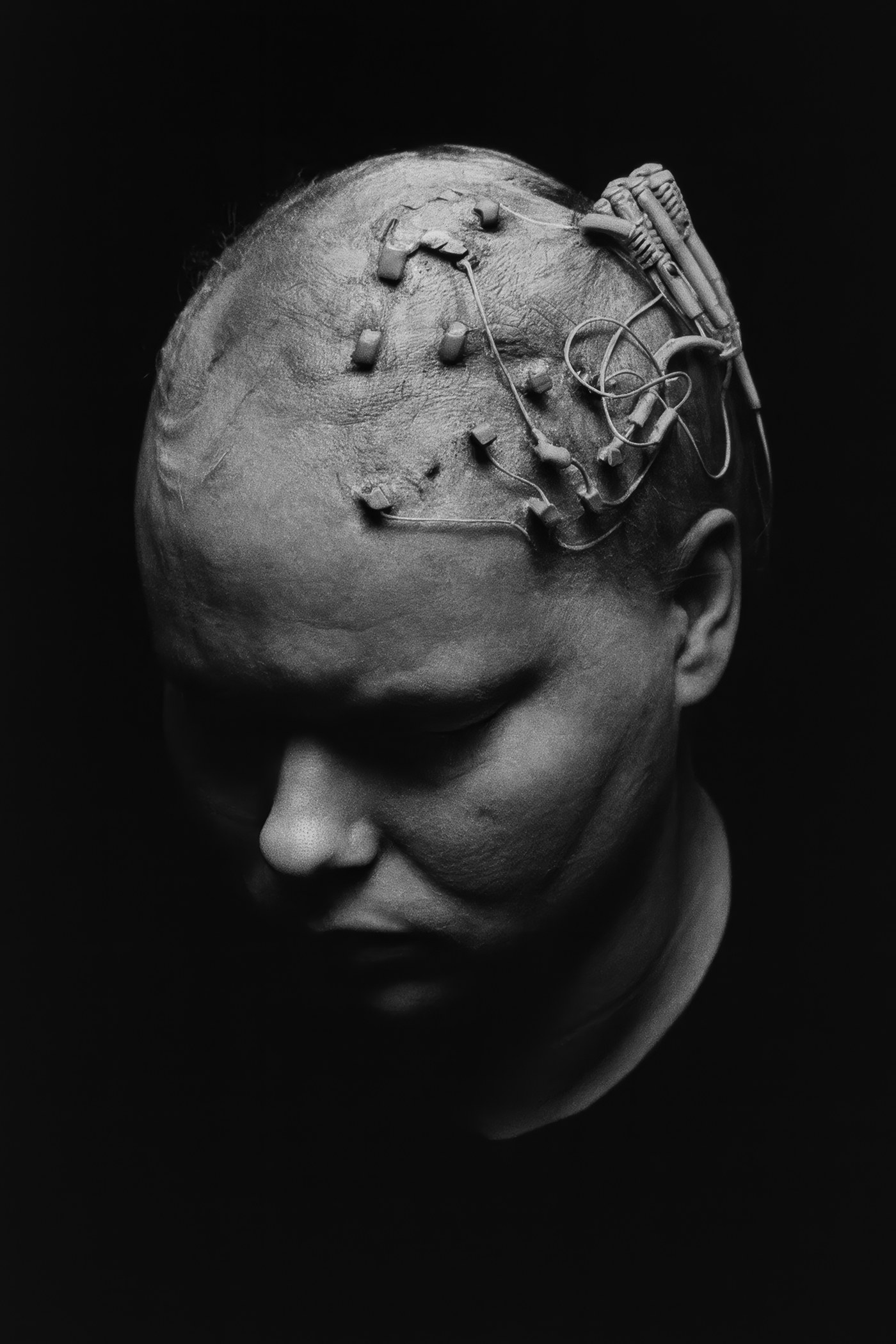
Anonymized: The Face as Data
The title names the outcome with precision, because to measure a body completely is already to anonymize it. Identity, as ordinarily understood, lives on the surface, in expression and in the small asymmetries a photograph exposes, and beneath these the scan finds only cavity, bone, and density, structures that differ in detail yet are, in principle, the same equipment in every skull. The more total the image, the less it belongs to a person. Anonymity is the shadow that completeness throws.
This binds the series to its moment. The present treats the face as the richest data a body can yield, to be captured, matched, harvested, and synthesized, and theorists of the biometric turn such as Irma van der Ploeg have traced how the body is steadily rewritten as information, the person doubled by a data self that can be stored and circulated apart from them. Bilbao carries that tendency to its conclusion. When measurement becomes total, recognition does not sharpen, it collapses, and the individual disappears into the very completeness that was meant to fix them in place.
So the work reads the generative present against its own promise. Facial recognition and image synthesis both assume the face is legible data, a key that opens or a pattern that regenerates, and Bilbao grants that assumption and follows it to the end, where the fully captured face comes back with maximal presence and minimal identity. The portrait becomes an argument in images, a demonstration of how little of a person remains once the body has been perfectly imaged and made available to be generated again.
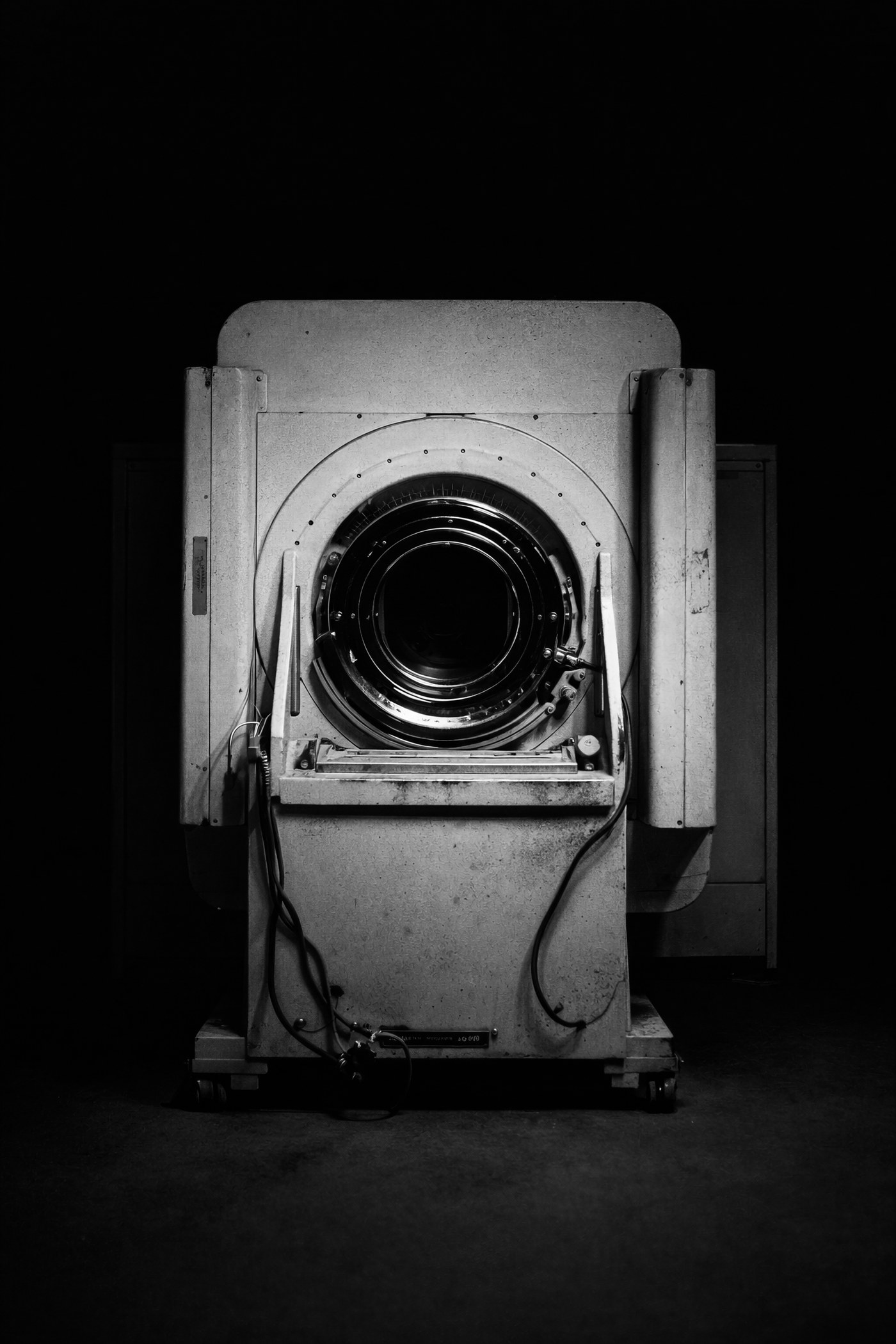
The Confession of the Apparatus
Across the series, the apparatus refuses to stay hidden. In the scanned portraits, Bilbao keeps the errors the medical workflow exists to remove: streaks and distortions cast by high density materials such as metal, and the noise that gathers where the machine reaches toward very low densities and the air around the body enters the image. Clinical practice corrects these events. Here they are sought and preserved, allowed to remain as the visible signature of the machine at work.
In the terms of glitch theory, as Rosa Menkman has argued, noise is the moment a medium stops being transparent and exposes its own procedure, the instant the machine admits how it sees. The artifacts are that admission, and the machine-images are its fullest form, the apparatus shown not through its traces but as itself. The series confesses its conditions of production twice over, in the residue inside the portraits and in the instruments standing alone.
This is where the strangeness of the work is located, in the ordinary operation of clinical imaging rather than in any invented monster, and it is what pulls ANONYMIZED toward the science fiction and horror Bilbao has moved into. The uncanny here is documentary, an unease that belongs to the equipment, and the artist has chosen not to correct it away.
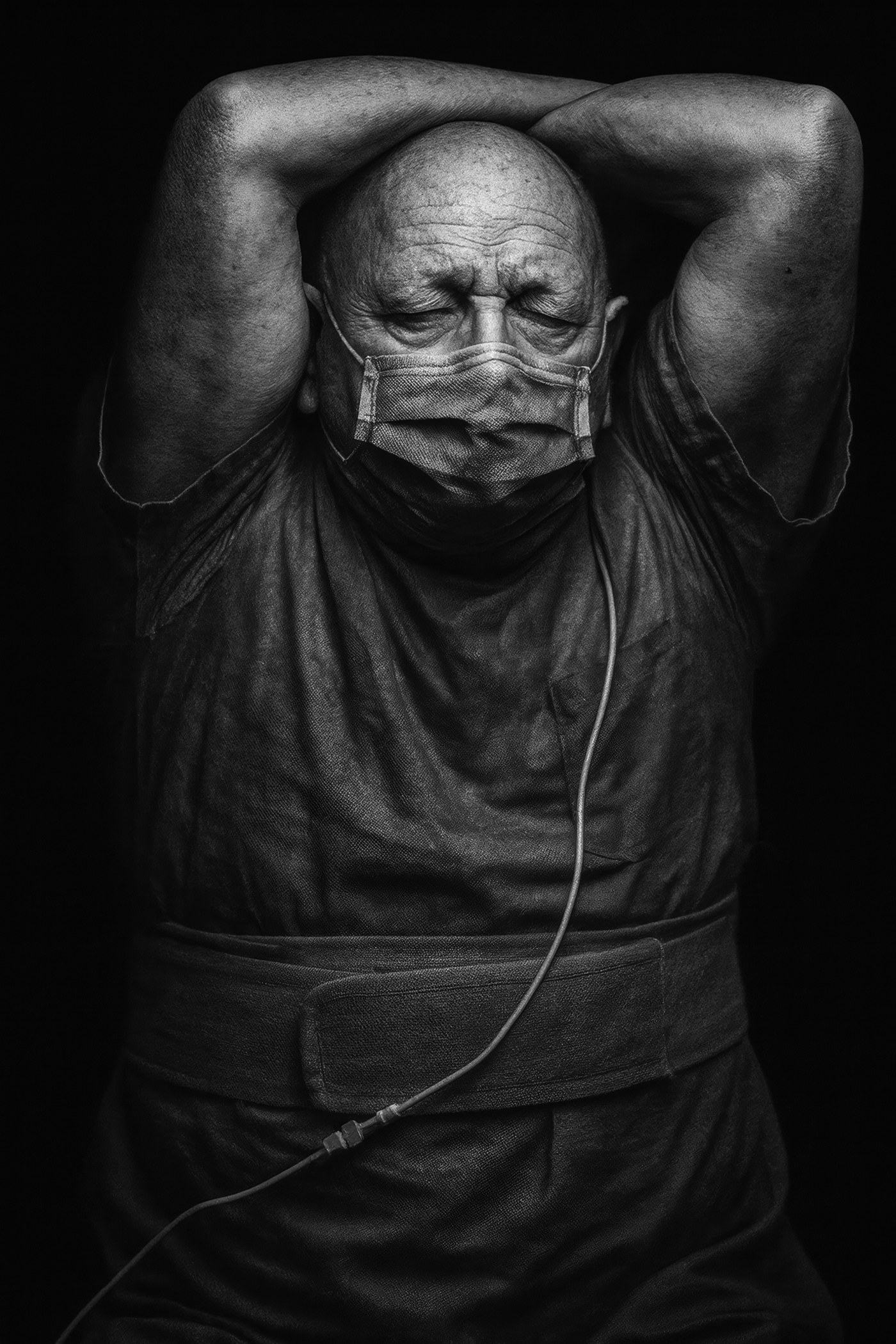
A Vanitas for the Scanned Subject
The body at the origin of the scanned portraits is the artist’s own head. In that branch of the series ANONYMIZED is a self-portrait in the strict sense, drawn from the interior of the person who signs it and emptied of everything that would let us recognize him. Bilbao gives his own skull to the machine and receives a face that is complete, precise, and no longer his, a self returned as the anonymous property of a system that can store and reissue it at will.
A portrait built from a CT scan is also a vanitas rebuilt for the present. The old genre set a skull beside the living figure to insist that death waits under the flesh, but Bilbao needs no such emblem, because the instruments that render his face read the bone within it in the same pass, and mortality arrives as method rather than as symbol. He rewrites the memento mori for an age in which the body is not only mortal but transferable, in which to be fully imaged is to become storable, comparable, and reproducible after the fact.
What the series finally holds together is the instrument and the subject, the machine that measures and the body it dissolves into data, both isolated, both anonymized, both returned by the same computational vision. Bilbao states that condition without alarm and without consolation, and lets the apparatus and the measured face look back from inside the system that made them, where there is no longer a single name behind the look.
Iñigo Bilbao lives and works in Barcelona, Spain. He specializes in 3D imaging, 3D scanning, and experimental medical imaging, and has worked with laser scanners, medical scanners, X-ray systems, and electron microscopes. His practice has long explored the relationship between art, science, and technology, and his recent experimentation with AI-generated imagery has moved his work closer to the territories of science fiction and horror. His work has been exhibited internationally at Ars Electronica in Linz, Transmediale in Berlin, MIMA Museum in Brussels, and LABoral in Spain.
ANONYMIZED
by Iñigo Bilbao
Live July 29, 2026
6:00 PM CEST / 5:00 PM BST
10 unique 1/1 works
English auction, no reserve
alpha.fakewhale.xyz